


We’ve all felt it. That creeping tightness that starts at the base of the skull, winds its way across the tops of the shoulders, and settles deep into the shoulder blades like an unwanted guest. You try to stretch it out. You try to “sit up straight.” But by 3:00 PM, your shoulders are back up by your ears, acting as a physical shield against a world that feels a little too heavy.
In our exploration of the map of the body, we find that every line, every tension point, and every fluid movement tells a story of where you have been and where you are going. But today, I want to talk about a specific landmark on that map: the armor.
When we experience stress, grief, or sudden trauma, our bodies don’t just “get over it” because our minds decided to move on. Our nervous systems are much more literal than that. They build a fortress. Specifically, they use your fascia—the connective tissue that weaves through every muscle—as the mortar for that fortress.
What is Fascial Armoring?
To understand why your shoulders feel like granite, you have to understand the fascial system. Think of fascia as a 3D connective web. It is a continuous matrix of connective tissue that surrounds every muscle fiber, organ, and nerve ending. When we are healthy, hydrated, and emotionally regulated, fascia is fluid and slippery, allowing our muscles to glide over one another with ease.
However, when we live in a state of “High Alert”—whether from a demanding modern job, a past accident, or a childhood spent in “survival mode”—the fascia undergoes a process called solidification.
In the world of somatic bodywork, we call this “armoring.” It is the physical manifestation of a psychological defense mechanism. Your body is quite literally bracing for impact, even years after the initial threat has passed.
The Biology of “The Hunch”
In a fight-or-flight scenario, the body naturally protects its most vulnerable parts: the throat and the heart. We subconsciously pull our shoulders up and forward to “armor” these vitals.
If the stressor is temporary, the fascia eventually relaxes. But if the stressor never truly goes away—if you are living in a chronic state of “waiting for the other shoe to drop”—the fascia begins to thicken and knit together in that defensive position. This isn’t just “bad posture”; it is a physical record of your resilience and your survival.
Why the Shoulders? The Burden of “The Carry”
There is a profound reason we use phrases like “carrying the weight of the world on your shoulders.” In the map of the body, the shoulders are the seat of responsibility and suppressed emotion
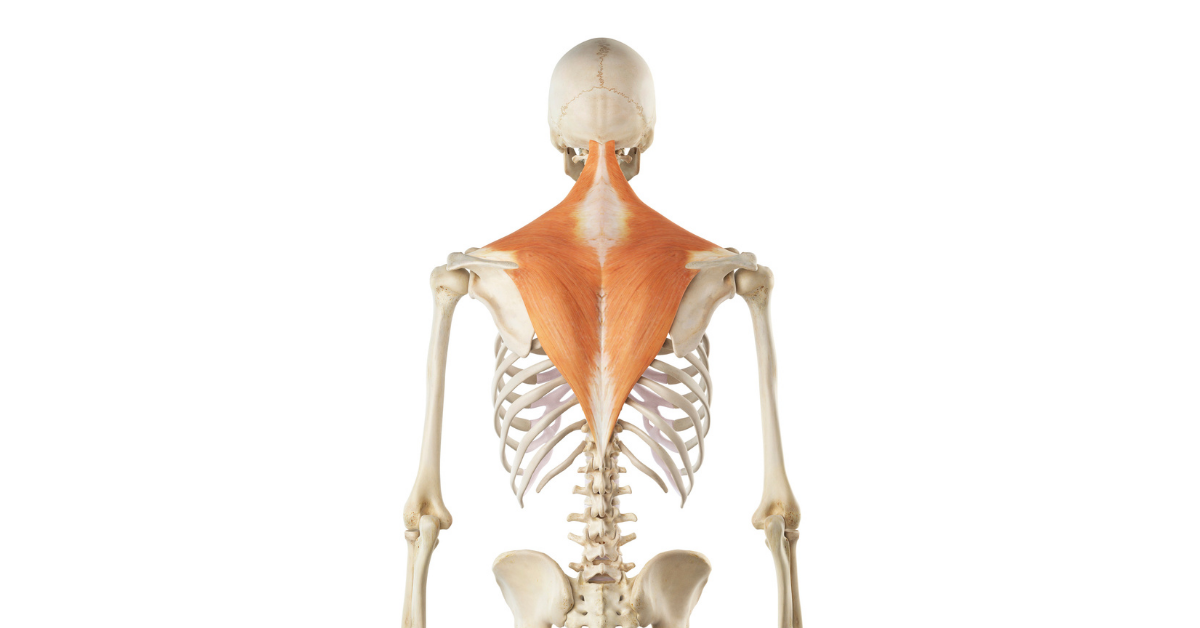
The Trapezius: The First Responder
This large, diamond-shaped muscle is often the first to react to emotional stress. It is deeply connected to our “startle reflex.” When you are surprised or scared, the traps fire instantly. Chronic trap tension is often a sign of a nervous system that hasn’t been allowed to fully “de-escalate.”
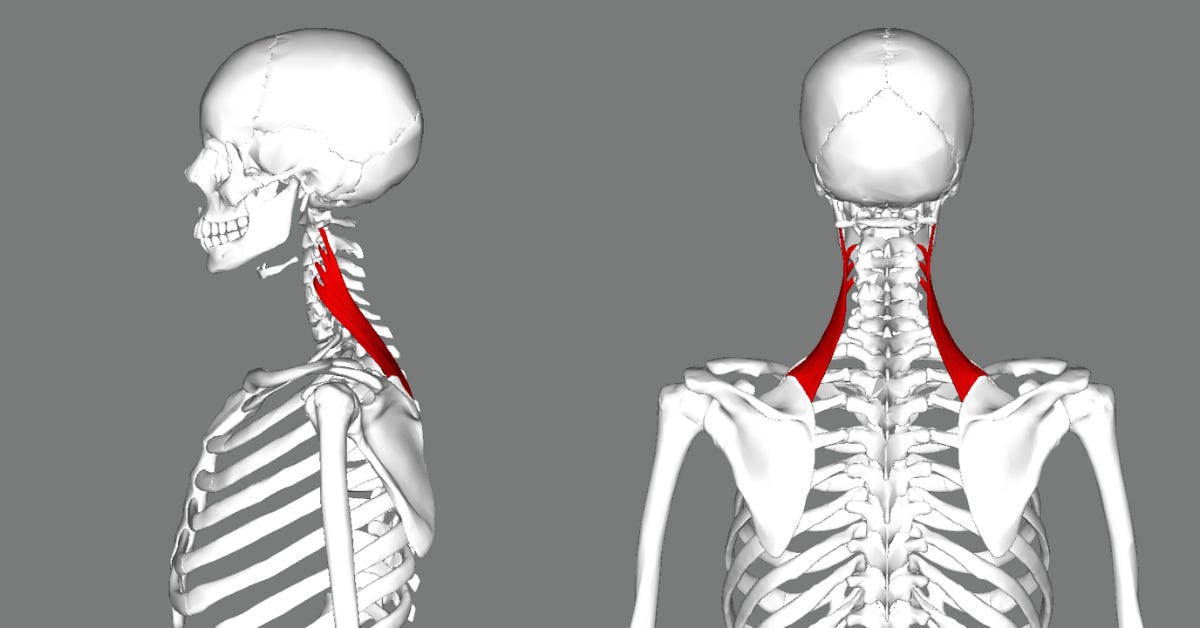

The Levator Scapulae: The “I Don’t Know” Muscle
This is your “shrug” muscle. When you feel like you have no answers, or when you are constantly braced for a burden you aren’t sure you can handle, this muscle stays shortened. This is a primary culprit for those chronic tension headaches that feel like a band tightening around your skull.
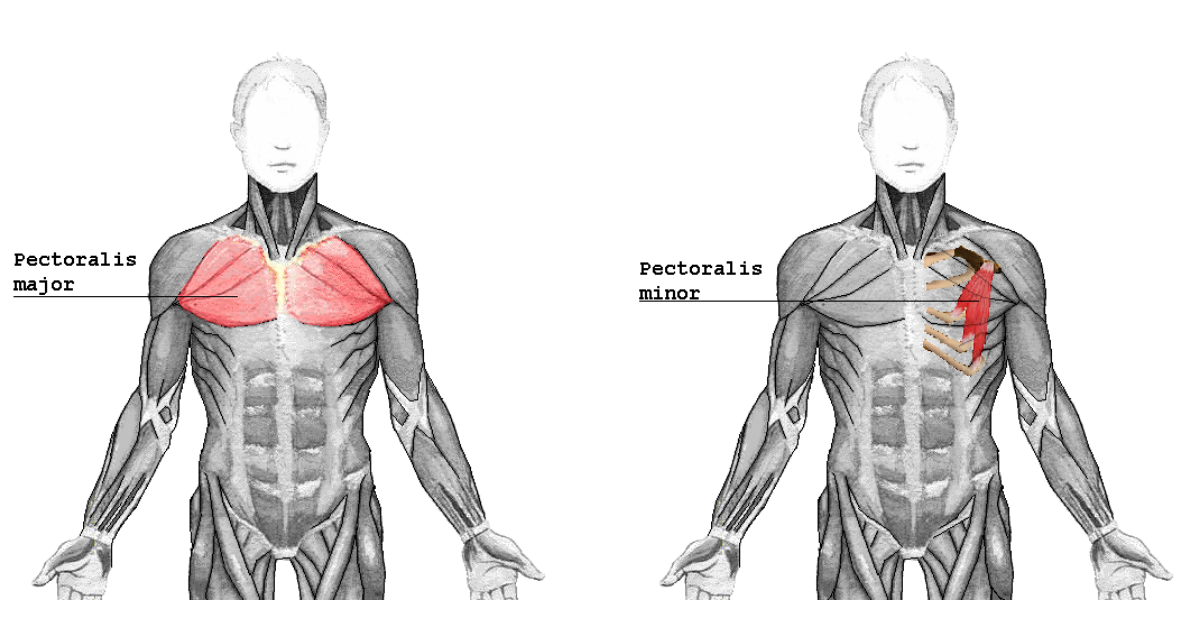


The Pectorals: Closing the Heart Space
When we are emotionally guarded, our chest muscles tighten. This pulls the shoulders forward and rounds the back, effectively closing off the heart space. Physically, it makes deep breathing difficult; emotionally, it creates a sense of isolation and “hiding.”
The Cycle of Chronic Tension
The tragedy of armoring is that it becomes a self-fulfilling prophecy. This is the “Fascia of Fate” loop:
The Trigger: A stressful event or long-term environment occurs.
The Bracing: The nervous system signals the muscles to contract for protection.
The Solidification: The fascia changes its texture. It shifts from being like liquid silk—pliant and moving—to being like stiff, unyielding clay. This thickening happens to support the constant contraction, essentially locking you into your defensive posture.
The Feedback: The brain receives signals from this rigid tissue. It interprets the physical “stuckness” as a sign of ongoing danger, which keeps the brain in a state of high anxiety.
Breaking this cycle requires more than just “positive thinking.” It requires a physical intervention to tell the tissue—and by extension, the nervous system—that the war is over.
How Massage Breaks the Cycle
Many people view massage as a luxury or a “pampering” session. However, that isn’t the Soul Trine way. If you haven’t noticed, we don’t offer Swedish massage as a service option. We aren’t here for the temporary “spa high” that fades by the time you reach your car. Our type of relief goes deeper than the surface of soap opera decor; we want you to feel better long after your time on the table is over.
When we look at bodywork through the lens of trauma and fascial armoring, it becomes a vital tool for neurological recalibration. We aren’t just moving muscle; we are speaking to the nervous system. Because we are dealing with the physical storage of past experiences, we approach this work as Certified Trauma-Informed Coaches. Our priority is creating a “container” of safety where your nervous system can finally choose to disarm.
1. Deep Tissue and Trigger Point Therapy
When armor has solidified, we need a targeted approach to reach the deeper layers of the body map. Deep Tissue Massage isn’t about “firm pressure” for the sake of it; it’s about slow, deliberate strokes that reach the sub-layers of muscle and the dense fascia that binds them. We do not have to use high pressure to address your needs; there are many options to address pain for people who require a lighter touch. This work helps to physically break apart the adhesions—the places where your armor has literally glued itself together.
Complementing this is Trigger Point Therapy. A “knot” is often a localized area of intense muscular contraction where the nervous system is stuck in a loop of “firing.” By applying focused pressure to these points, we interrupt that signal and force the tissue to reset, encouraging fresh blood flow to areas that have been stagnant for years. It’s like hitting the “reset” button on a computer that has been frozen in a defensive loop.
2. Vagus Nerve Stimulation
The neck and shoulders are home to pathways that influence the Vagus Nerve, the commander-in-chief of your parasympathetic nervous system (the “rest and digest” mode). When we are armored, the Vagus nerve is effectively “muted” by the compression of the surrounding tissues. By releasing the tension in the suboccipital muscles (at the base of the skull) and the scalenes, massage can actually “flip the switch” from fight-or-flight back to safety. This is where the physical meets the emotional; when the Vagus nerve is free to communicate, the brain finally receives the message: You are safe now.
3. Somatic Emotional Release
It is not uncommon for clients to feel a sudden wave of emotion—sadness, anger, or even a sudden sense of relief—when a specific “knot” in the shoulder is worked out. This is a Somatic Release. Your tissues are finally letting go of the kinetic energy they’ve been holding onto for years. When the armor comes down, the stored story is finally allowed to breathe. As coaches, we hold space for this release, ensuring you feel supported as your body processes these old chapters.
The Importance of Trauma-Informed Care
When we work with the “Fascia of Fate,” we aren’t just working with muscles; we are working with your history. This is why a trauma-informed approach is non-negotiable.
Being trauma-informed means we understand that a “standard” massage can sometimes feel overwhelming to an armored nervous system. If a therapist pushes past a “brace,” the nervous system may interpret that as a fresh threat, causing the armor to harden even further. Our certification as coaches allows us to recognize “bracing” not as resistance, but as a boundary. We work with your body, never forcing a release, but rather inviting it through safe, regulated touch and somatic awareness.
Reclaiming Your Body
Your “Fascia of Fate” doesn’t have to be a life sentence. You aren’t “broken,” and your tight shoulders aren’t a failure of willpower. They are a testament to how hard your body has worked to protect you.
But you don’t have to live in a fortress anymore. You can move from a state of “armored survival” to one of “fluid grace.”
Practical Steps to Soften the Armor Today:
The “Exhale Drop”: Set a timer for every hour. When it goes off, take a deep breath in, and on the exhale, consciously imagine your shoulders melting toward your hips. Notice the space created between your ears and your traps.
Hydration: Fascia is made mostly of water. If you are dehydrated, your connective tissue becomes brittle. Drink water to keep your tissues slippery.
Professional Bodywork: Seek out therapists who specialize in Deep Tissue and Trigger Point Therapy. Tell them you are looking to work on “chronic holding patterns” and the “solidified” feeling in your shoulders.
A New Map
At the end of the day, your body is a living history. Every knot in your shoulder is a chapter of a story you survived. But through intentional massage and somatic awareness, you get to write the next chapter.
Your shoulders were meant for reaching, hugging, and lifting—not just for carrying. It’s time to let the armor go and rediscover the fluid, open map of who you truly are.
With love and alignment,
Aether Candace
Sources and Further Reading
To dive deeper into the science of fascia and the somatic impact of trauma, explore the following resources:
The Polyvagal Theory: Learn more about how the Vagus nerve regulates safety and defense through the work of Dr. Stephen Porges.
Fascial Research: Explore the latest clinical studies on connective tissue at the Fascia Research Society.
The Body Keeps the Score: Dr. Bessel van der Kolk’s seminal work on how trauma is physically stored in the body.
Myofascial Anatomy: For a visual map of how muscles and fascia connect, refer to Thomas Myers’ Anatomy Trains.